
Platform
Same Operating Model
Different Entry Points
Brand-centric execution to drive your narrative. Partner-centric rollouts to move your market. Buyer precision for the enterprise cycles that matter.

TCMA
Brand-led channel demand
Mapped across partners to buyer action.

PDA
Partner-led channel demand
Activated across brands to buyer action.

CDA
Alliance-led channel demand
Composed from brands and partners to buyer action.
Demand doesn't stay where it starts.
Coverage shifts across all three as the deal develops.
The Operating Model
From mapped to activated
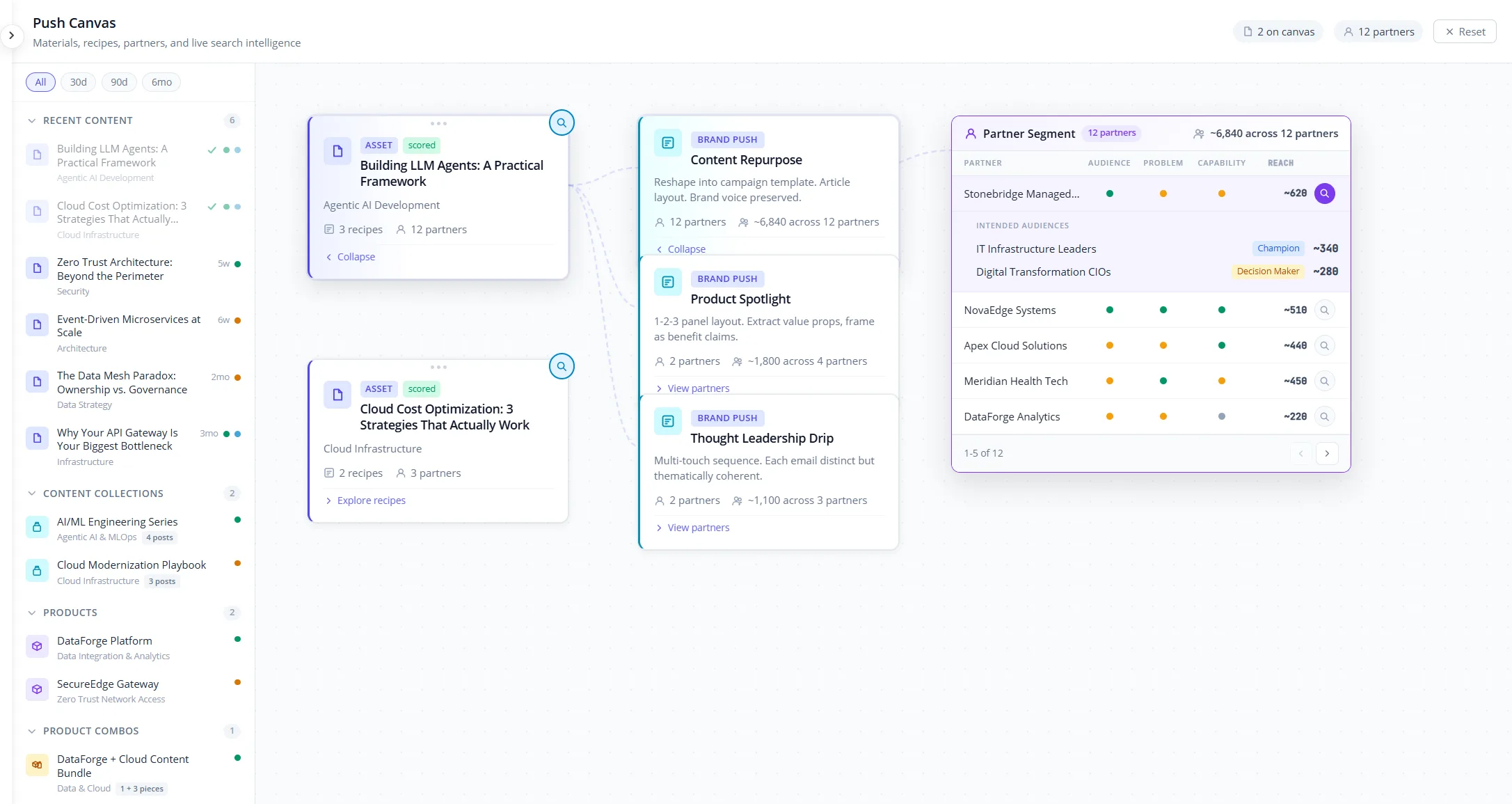
Given your content and the products it sells, we identify the partners whose background makes them most likely to carry that value prop to their own audience.
A catalog of what you sell, and the templates that carry it.
A ranked list of who should carry each piece.
A campaign pointed at a chosen segment.
The send, out under the partner's name.
Both Sides
One platform, both sides of the channel.
The brand runs its partner roster. Every partner runs their own CRM. Each sees only what's theirs.
Result: a roster on the brand side, a working CRM on the partner side, and a shared operating model between them.
At a Glance
What DemandVector adds to the GTM stack
| Capability | CRM | Brand Portal | Sales Ops | DemandVector |
|---|---|---|---|---|
| Brand strategy and offers | ⚠Records | ⚠Assets | ⚠Playbooks | ✓Mapped |
| Partner relationships and audience | ⚠Contacts | ✕ | ⚠CRM | ✓Connected |
| Partner fit and timing | ⚠Raw data | ✕ | ⚠Signals | ✓Scored |
| Motion routing | ✕ | ⚠Library | ⚠Lead based | ✓Routed |
| Cross-brand solution stories | ✕ | ⚠Separate | ⚠Per deal | ✓Composed |
| Next buyer action | ⚠Tasks | ✕ | ⚠Sequences | ✓Activated |