
HVAC Partner Marketing
Your CRM Already Knows Who Needs a New HVAC System
Turn install dates, equipment brands, membership status, and service history into the next useful customer conversation.


Most established HVAC shops already have years of customer history in their CRM. Install dates. Equipment brands. Membership status. Last service visits. Unsold estimates.
That history becomes more useful with every season. An installed system moves closer to the point where it should be evaluated. A membership approaches renewal. A customer who skipped last fall's tune-up reaches another stretch of heavy use.
The opportunity is to turn those records into the next useful conversation while the reason to act is clear.
Your CRM is a map of the next conversation
Every ordinary field in an HVAC customer record can help identify what should happen next.
- Install date shows which customers have systems old enough to begin an evaluation or replacement-planning conversation.
- Equipment brand determines which rebates, financing programs, and product updates fit the system already in the home.
- Membership status identifies upcoming renewals and customers who may be ready to return.
- Last service date opens the next tune-up conversation before peak demand fills the calendar.
- Unsold estimates preserve work the customer already considered, along with the reason it was recommended.
A customer with a 12-year-old Carrier system, no tune-up in 18 months, and a recently lapsed membership is not simply an old record. That customer has several timely reasons to hear from the shop they already know.
The CRM has done the work of holding the history. The next step is turning that history into a send.
The signal and the season decide what goes out
A useful HVAC message usually comes from two things: what the customer record says and what is happening now.
- An 11-year-old system plus the first sustained stretch of hot weather creates a natural replacement-planning conversation.
- A membership 45 days from expiration creates a clear renewal window.
- Fourteen months since the last service visit plus an open shoulder-season calendar creates a tune-up opportunity.
- An active manufacturer rebate plus the matching brand on the customer's equipment creates a relevant offer.
- An unsold repair recommendation plus another season of use creates a reason to revisit the estimate.
The same logic also knows when to stay quiet. A system serviced this spring does not need another tune-up note. A customer with a recently installed unit does not need a replacement message. Relevance comes from acting on the right signals and leaving the rest alone.
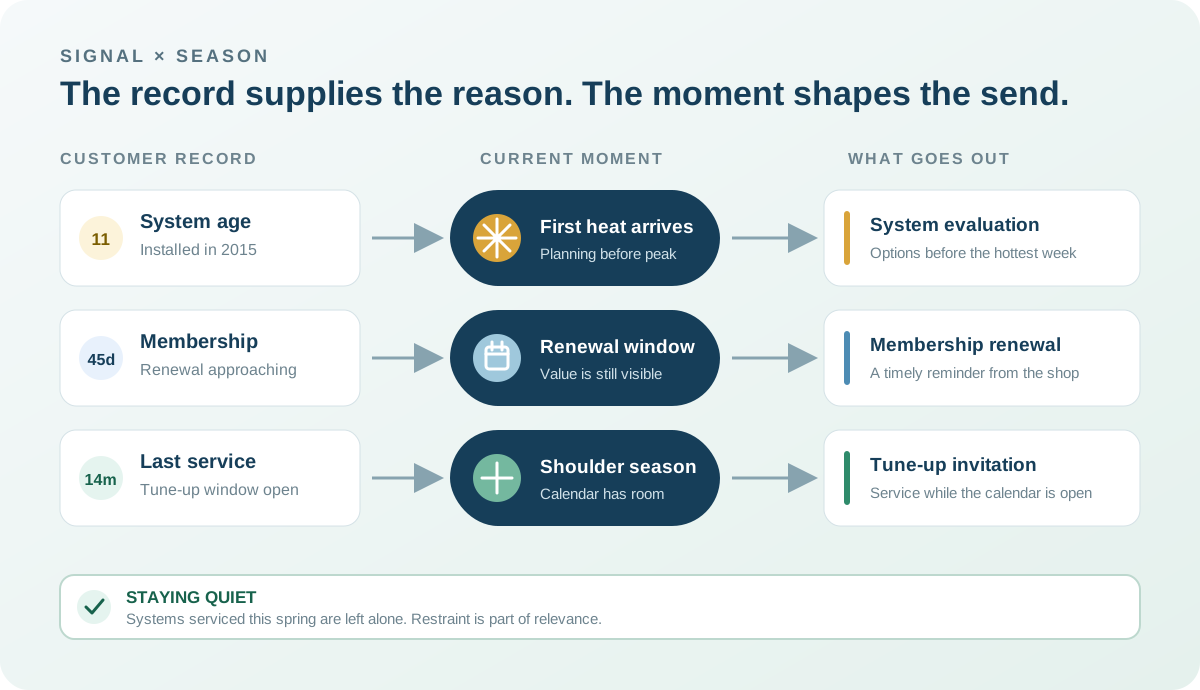
This is what demand coverage looks like in practice. An offer is not covered because it exists on a website or inside a manufacturer portal. It is covered when the right customer receives it at the right moment, through the company they trust to do the work.
The shop's name carries the conversation
Manufacturers bring valuable ingredients into the HVAC channel: equipment, product knowledge, financing, rebates, and proof. The local shop brings the customer relationship.
That relationship changes how the message lands. A homeowner is more likely to recognize a note from the company that installed or serviced their system than a general announcement from an equipment manufacturer. The brand still matters, but it arrives inside a conversation the shop has earned the right to have.
The strongest send combines both sides:
- the manufacturer's offer and product proof;
- the customer's actual equipment and service history;
- the shop's name, voice, and local credibility.
The manufacturer can contribute to the motion without gaining access to the dealer's customer list. The shop keeps control of its CRM, its audience, and its send.
How DemandVector turns the record into the send
DemandVector connects to the CRM the shop already runs and reads the signals available in each customer record. It combines those signals with the season, the shop's services, and relevant programs from the brands the shop carries.
From there, the motion is straightforward:
- Connect the CRM. Customer, equipment, membership, and service history remain the working source.
- Build the reason. DemandVector identifies the customer groups with a timely next conversation and creates the campaign around that reason.
- Send in the shop's name. Each message and landing page reflects the shop's brand, while relevant manufacturer proof and offers support the conversation.
- Bring the response back. Replies and form submissions stay connected to the customer, the signal, and the campaign that produced them.
The shop does not have to start each month with a blank template and decide what to say. The customer record supplies the reason. DemandVector turns it into the campaign.
What one service base can produce
Take a shop with 1,200 active customer records.
- If 15% have systems more than ten years old, that is 180 customers whose systems may be ready for an evaluation.
- If 20% have memberships approaching renewal, that is 240 retention opportunities with a clear date attached.
- If 30% have not had a tune-up in more than a year, that is 360 service conversations that can help fill the shoulder season.
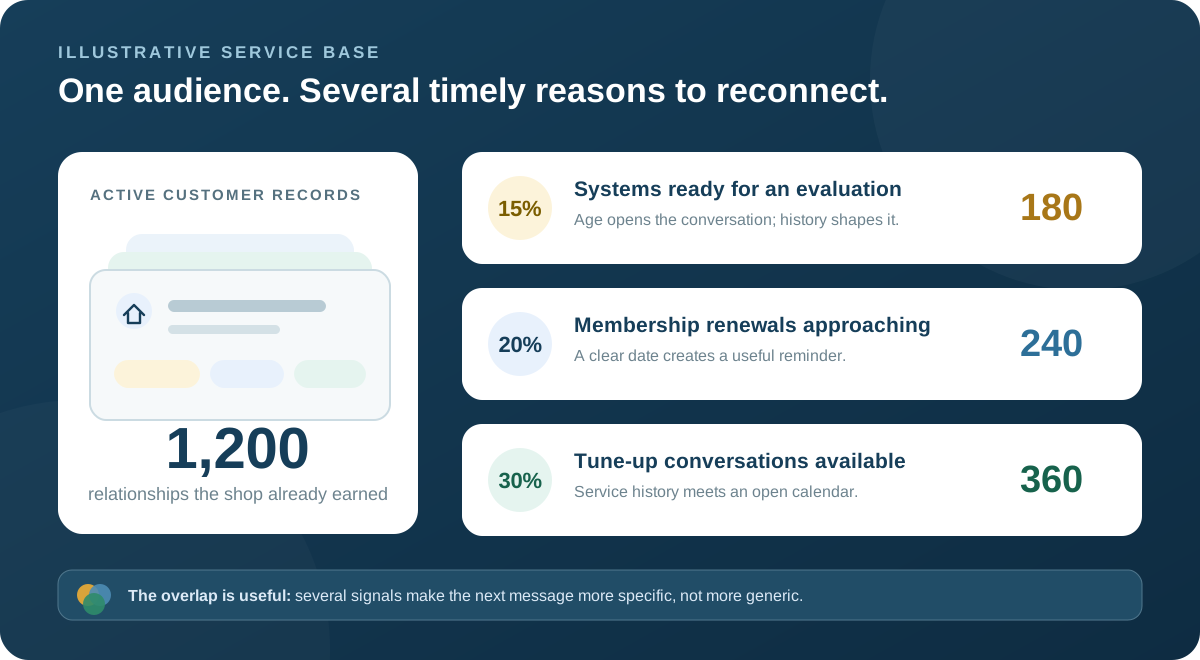
Those groups will overlap, and that makes the message more specific. A customer with an aging system, an overdue service visit, and a matching manufacturer rebate has a different reason to hear from the shop than someone whose membership simply renews next month.
None of these conversations begins with buying another list. They begin with reading the customer relationships the shop has already earned.
Net-new demand still has a place. New customers feed the service base and help the business grow. The CRM gives the shop another motion alongside it: a consistent way to create jobs from the customers, equipment, and history already present.
Bring your CRM. Leave with this season's send.
DemandVector gives HVAC shop owners and operators a direct look at what their own customer records can activate. The session is built around the shop, the signals available in its CRM, and the messages those signals can produce now.
See which customers are entering an evaluation, renewal, tune-up, or rebate window, and what can go out in your shop's name to start the conversation.
Also read


Don't take our word for it - ask ChatGPT what it thinks of this piece.